
Follow the reach. Control the mass.
Handling routes live with changing length, acceleration and anchor load. The starting point is the weight and the length difference, not a fixed kit.
Start with the failure mode, not the parts list.
The process creates the environment. The robot and tool create the geometry. A useful dresspack review connects the two before a diameter or bracket is fixed.
Total moving mass
Cable, hose, gripper and fixture all move with the robot. Add them before evaluating spring or telescopic travel.
Length delta
Measure maximum extension and minimum retraction from the real path. A static photo hides the problem the route has to solve.
Anchor load
J3/J4 fixing points see repeated dynamic load. Check the bracket, fasteners and local stiffness, not only the conduit.
Wear access
A high-cycle line needs a visible inspection point and a replaceable wear section without a long shutdown.
What to start with — and what to challenge.
Start here
- Start with Series 3 when the route must absorb a large stroke and rebound on a long-reach handling duty.
- Consider Series 5 when the same length change has to be stored in a compact envelope or the moving mass must be kept close to the arm.
- Consider Series 1 when the path is fixed, the stroke is small and the tool is light; do not add a mechanism without a motion reason.
- Run the full extension/retraction cycle and check the anchor points and cable bend radius at both ends.
Challenge before release
- Do not select a spring from payload alone; cable weight and acceleration change the answer.
- Do not assume an existing fixed point can take a new dynamic load because it looks strong.
- Do not route a long stroke through a sharp bend to save a bracket.
- Do not leave the wear part behind the gripper or in a place the maintenance team cannot reach.
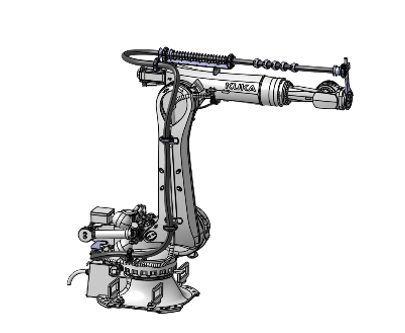
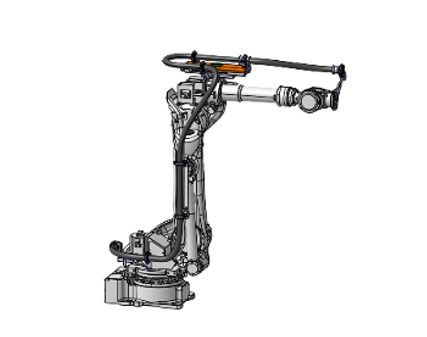
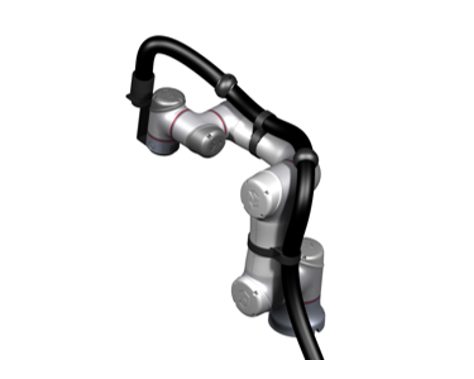
The route can use more than one architecture.
What we need to answer usefully.
- Robot brand, exact model, payload, reach and controller version
- Tool, gun, gripper or changer interface and its full motion cycle
- Complete cable and hose list with outer diameters and minimum bend radii
- J3/J4 anchor points and any existing bracket geometry
- Photos of the wrist, tool and current route; a motion clip if available
- Spatter, dust, temperature, cleaning method and maintenance window
Public context from the same process family.
 Handling
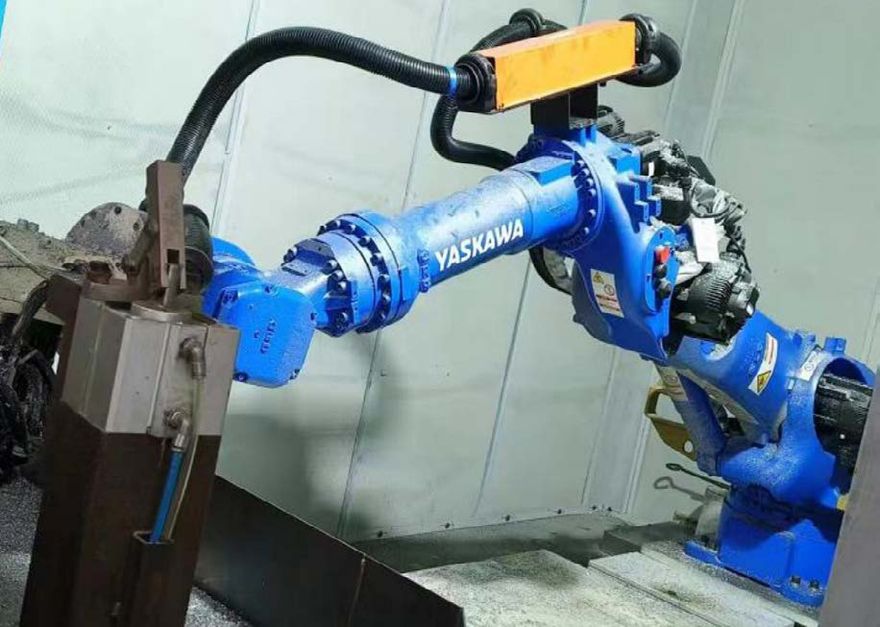
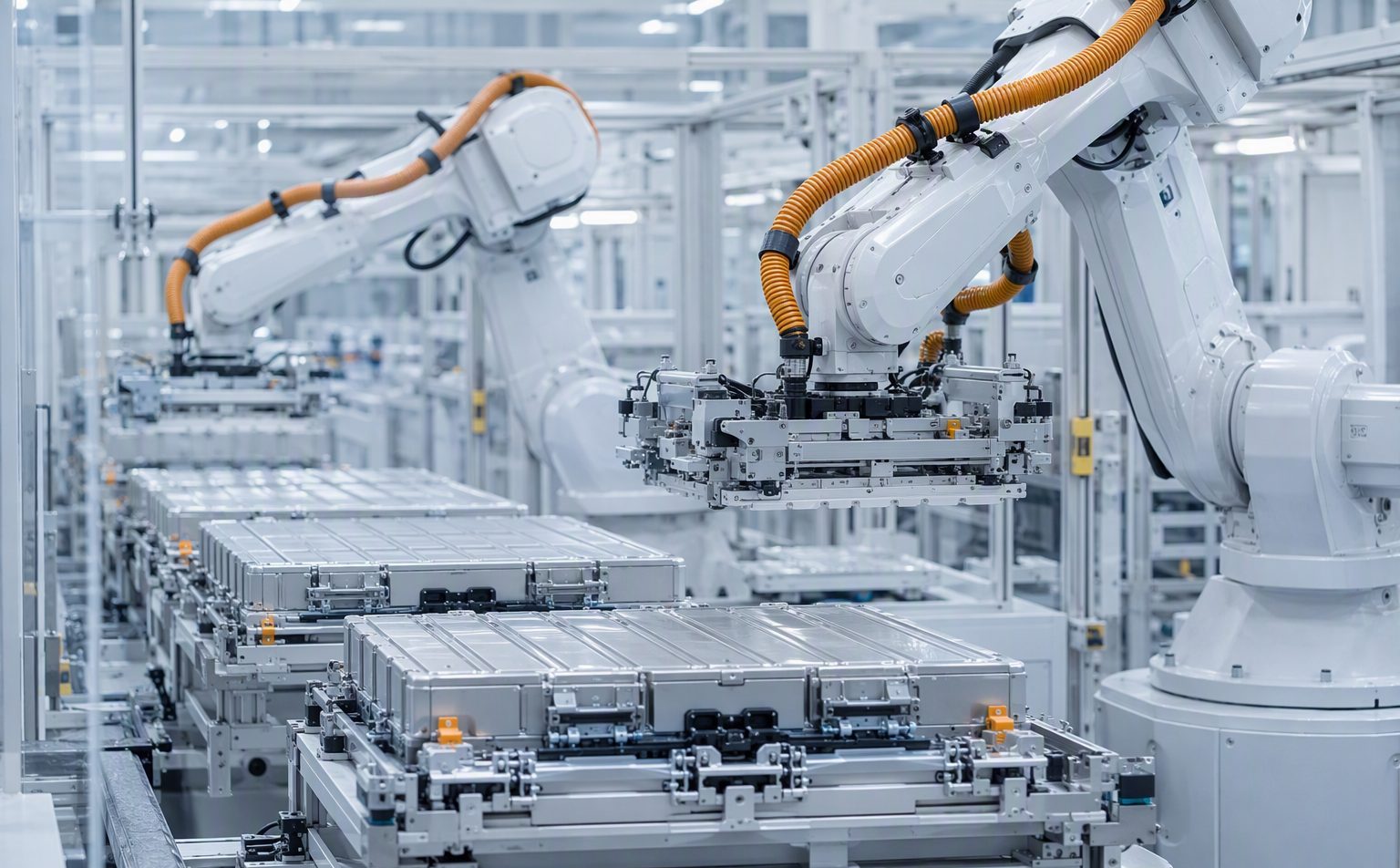
Long-reach handling with controlled rebound
A KR420 handling duty requiring the cable route to follow a large working envelope. The public record uses a Series 3 external spring with a cover route across twelve robots.
 Rotary handling
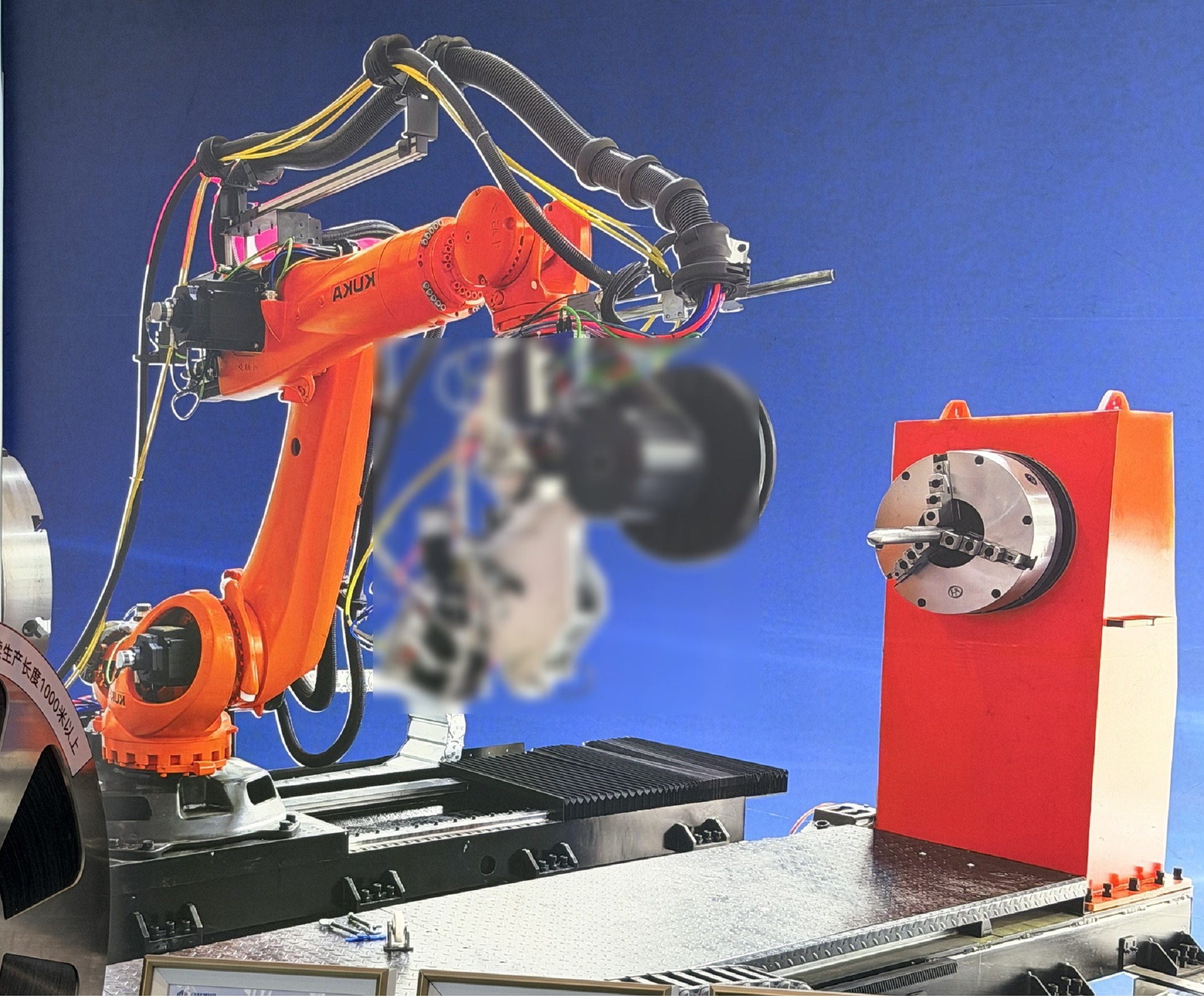
Rotary support on a long-reach handling cell
A public 2023 record using a 48 mm Series 2 route on an ABB IRB 6700 handling application. The record is useful for the route type, not as a copy-paste configuration.
 Specialist
Two hose paths, one moving envelope
A specialist thermoplastic placement and winding application recorded with a 48 + 70 dual-hose Series 4 telescopic route on a Comau N-170-3.0.
Before the kick-off call.
Does a process name determine the series?
No. The process is the starting context, but the route also depends on the robot model, tool cycle, bundle and service access. A spot-welding cell can need a combination.
Can you start from a photo?
A photo can identify the layout and likely interference points. A drawing release still needs the robot model, tool interface and the complete motion envelope.
How long does a first review take?
The public model map gives an immediate reference. For a project-specific drawing direction, the inputs above are needed; drawing work is quoted against the actual scope.
Can the route be retrofitted?
Yes, retrofit is a valid route when the robot and tool can support it. Re-measure the interface and inspect the existing cable before reusing anchors.
Start with the robot and the thing that goes wrong.
We will turn the brief into a reference architecture, a list of unknowns and a drawing path.