
Process first. Hardware second.
The same robot can need a different route on a welding gun, a dispensing tool and a vacuum gripper. We start with what the cable bundle has to survive, then select the architecture and diameter.
Protect the bundle. Preserve the motion.
Welding and handling are not opposite duties; they simply expose different failure modes. One route may need both a protective outer structure and a spring or rotary compensation.
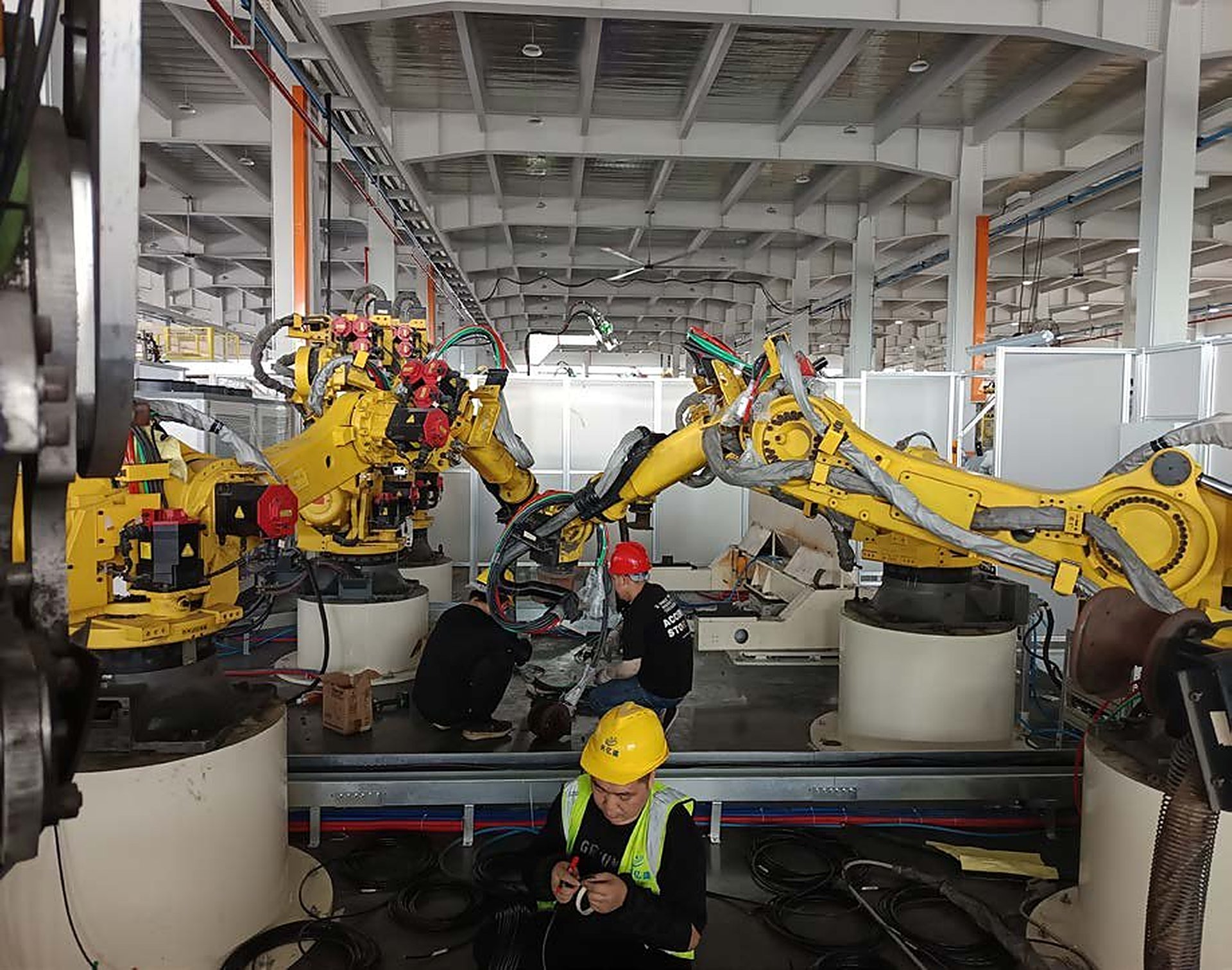 P01 / Spot welding
Spatter is a routing problem
before it is a material problem.
Where does the slag hit? Which axes see the most heat? How does the gun change? Start with the path and the service window.
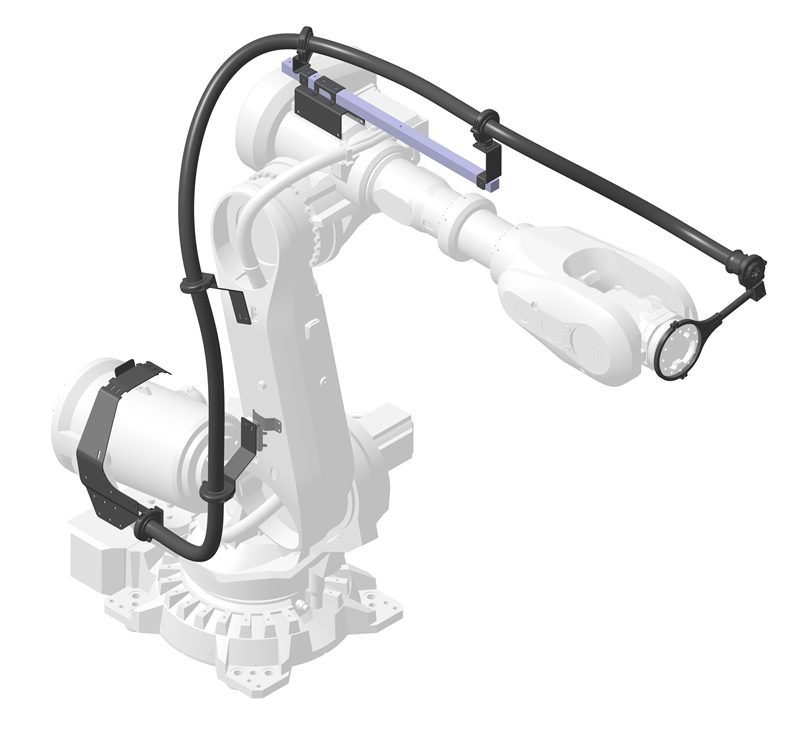 P05 / General handling
Long reach makes
length change visible.
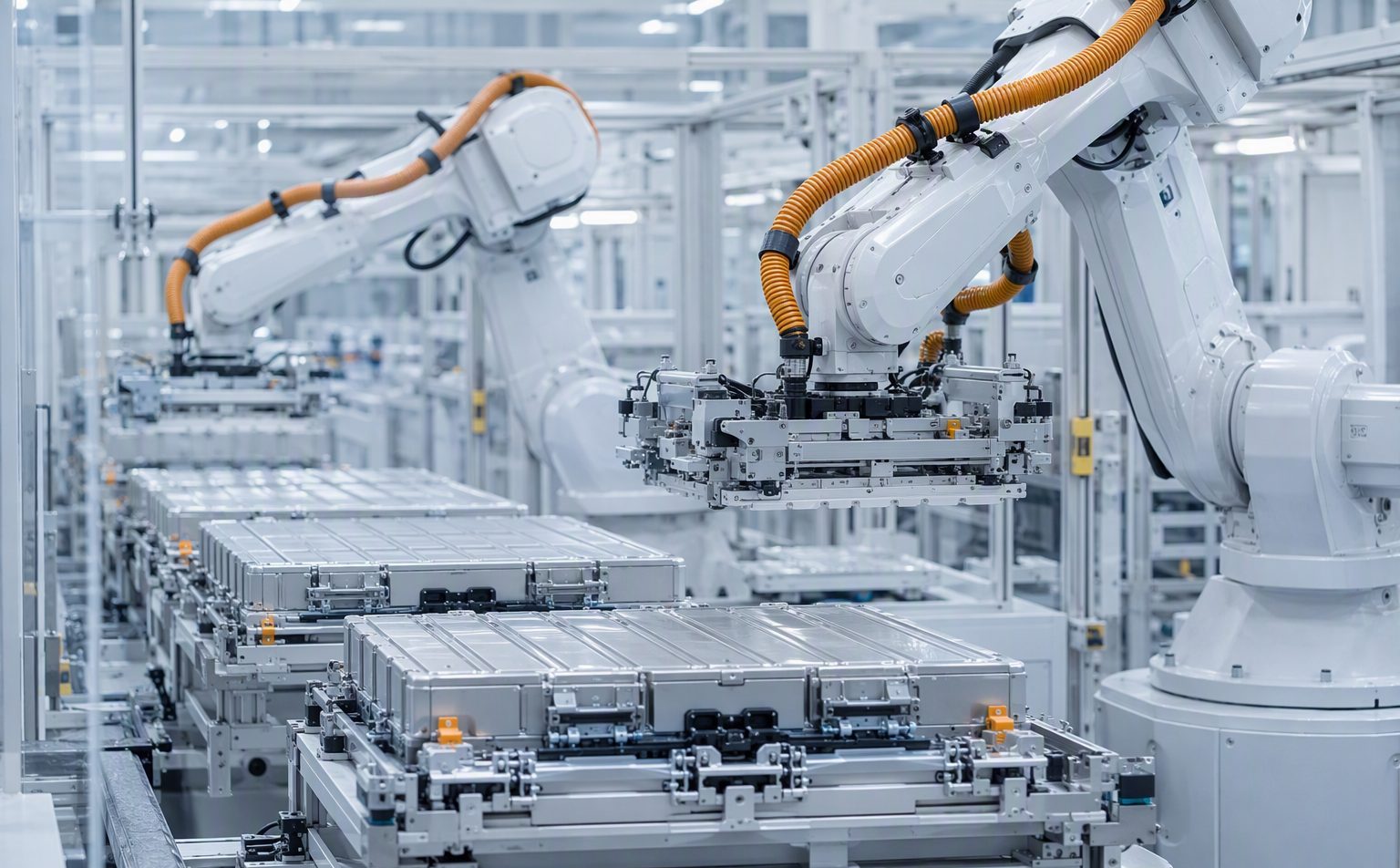
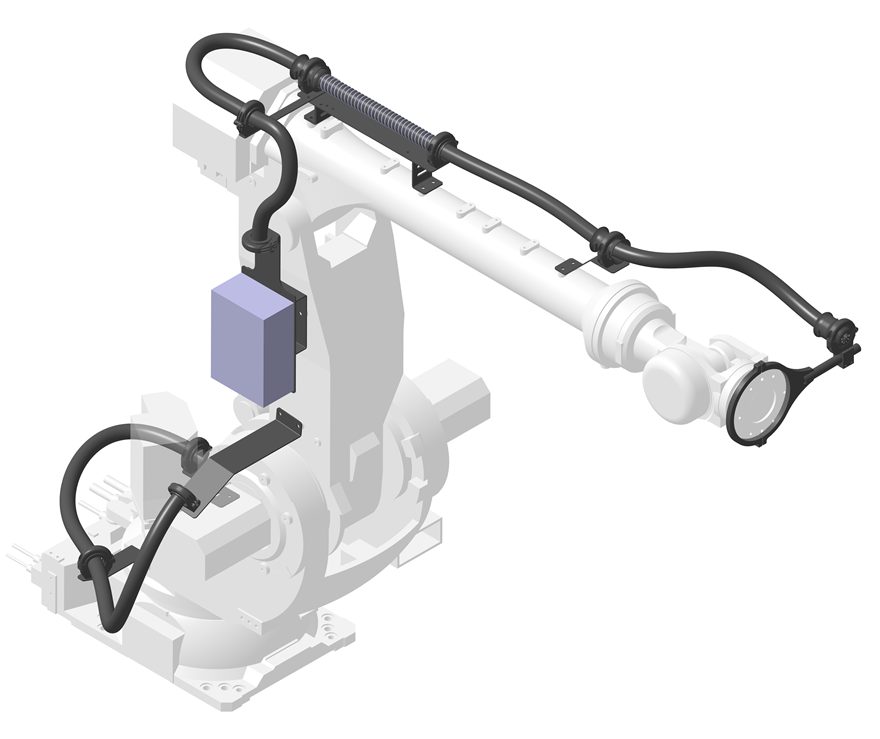
The route has to absorb extension and rebound, keep the moving mass controlled and protect the anchor points at J3/J4.
The same interface question, in a different environment.
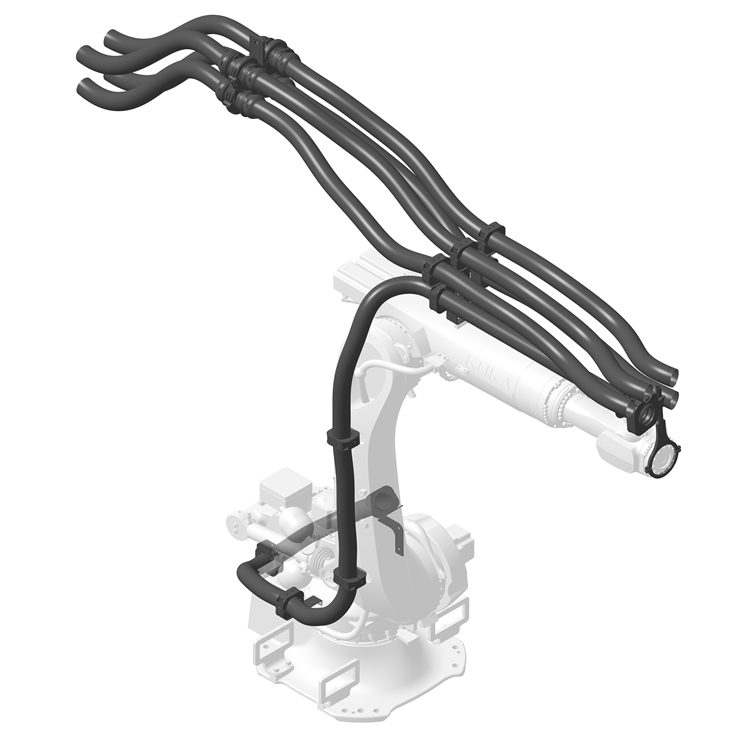
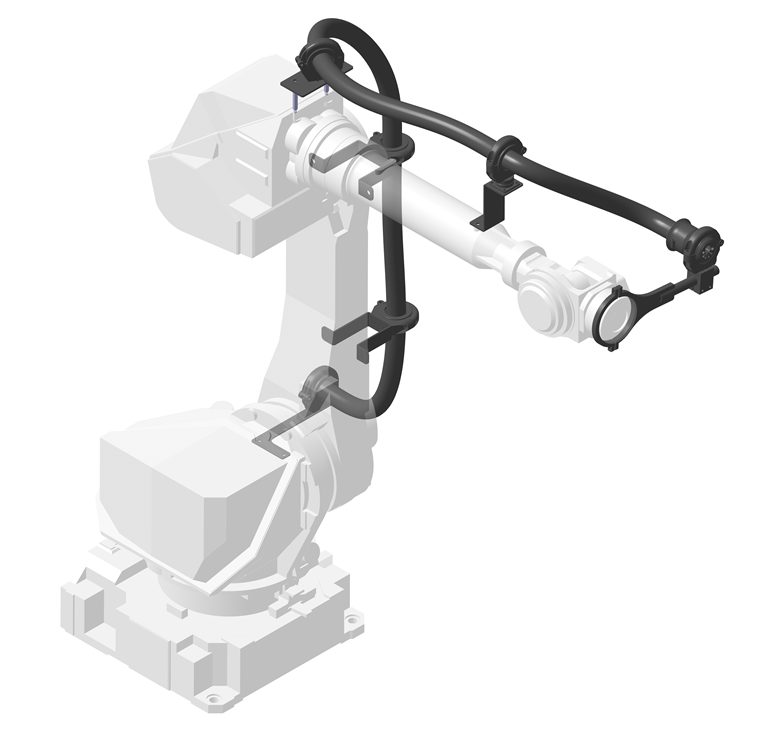
Twelve processes. One starting point: the real motion.
The public model map spans spot, stud, laser and friction-stir welding; FDS, SPR, gluing, assembly, forging, spraying and grinding. The route changes because the tool, heat, debris and service window change.
Send the tool, the debris and the motion.
A process name alone does not size a dresspack. Add the robot code and the path that makes the route difficult.